How Environment Shapes Your Cat’s Behaviour
When we think about cat behaviour, we often focus only on the cat.
Why are they climbing everywhere?
Why do they knock things over?
Why do they attack our feet during play?
But behaviour doesn’t exist in isolation.
A cat’s behaviour is constantly shaped by the world around them — the spaces they move through, the objects they interact with, the stimulation available to them, and even the routines of the household.
When we begin to look at behaviour through this lens, something interesting happens. What once looked like mischief starts to look like information.
Environment Is Part of the Conversation
Cats communicate through behaviour, but the environment quietly influences that communication.
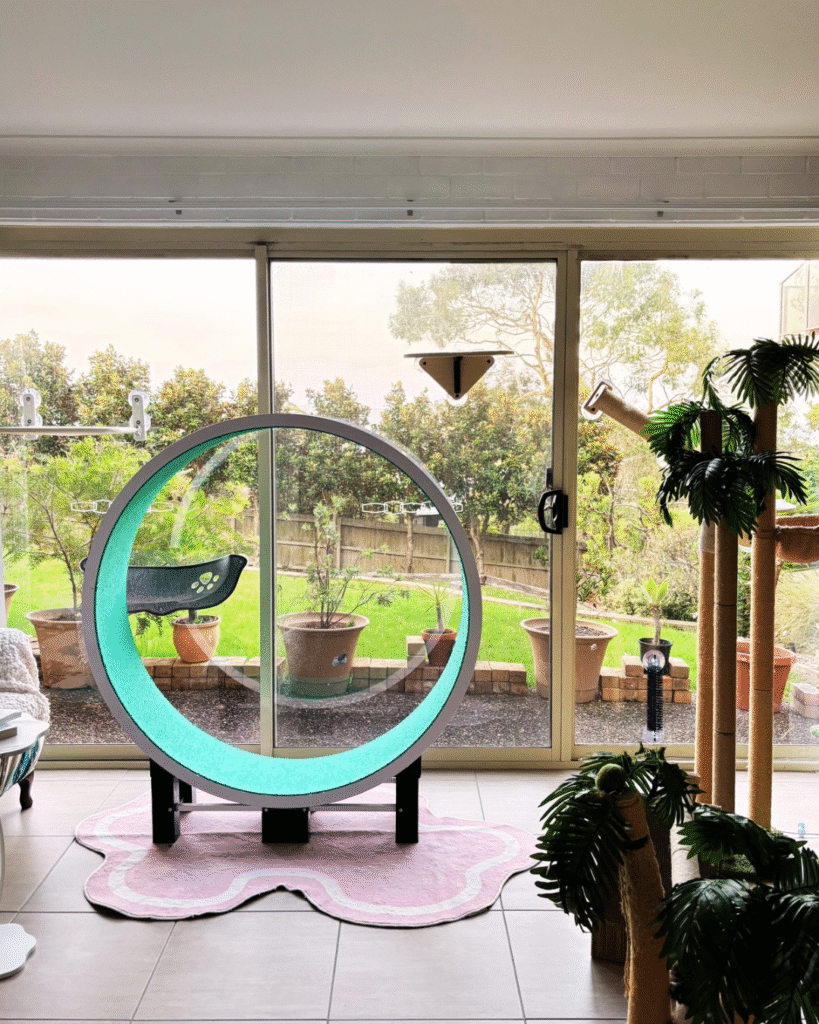
A home with few places to climb may lead a cat to explore shelves and countertops. A curious cat with little stimulation may begin opening cupboards, investigating drawers, or knocking objects over simply to see what happens.
Even small things such as the placement of furniture, access to windows, or the presence of other animals can shape how a cat responds to their surroundings.
Instead of asking How do I stop this behaviour?
we can begin asking a different question:
What is the environment encouraging my cat to do?
Often, behaviour becomes easier to understand when we look at the space the cat is living in.
Seeing the Home Through Your Cat’s Eyes
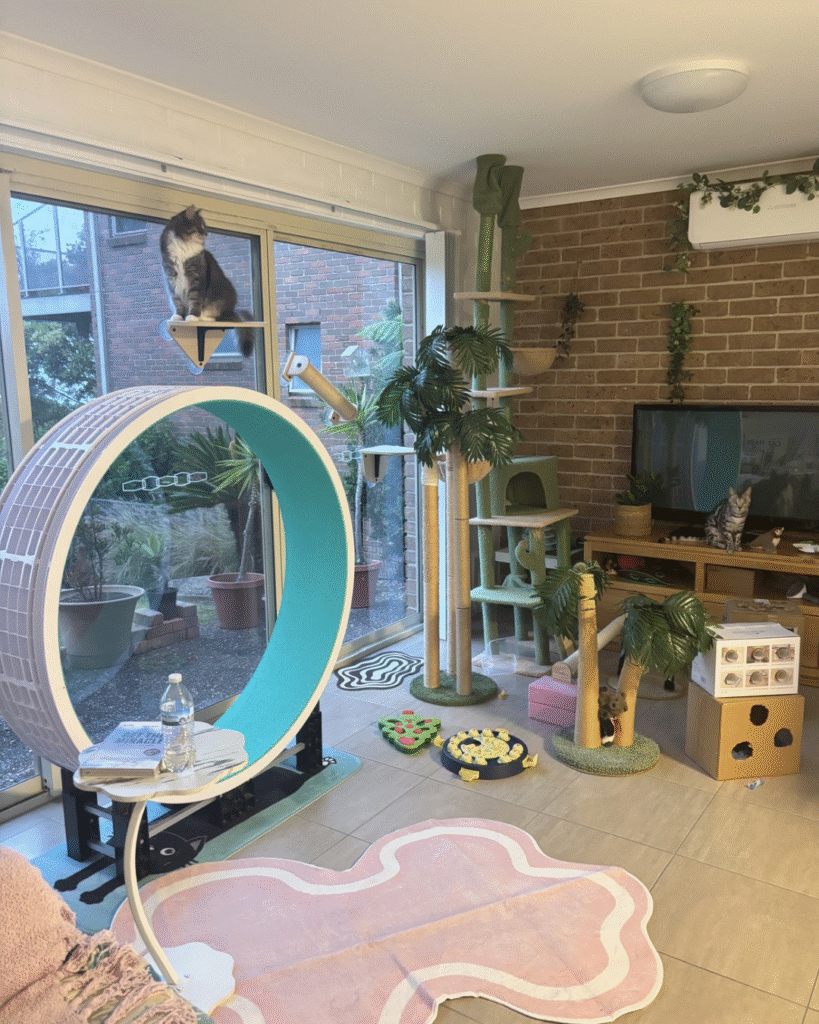
Cats experience their environment very differently from we do. They notice vertical spaces we overlook. They observe movement outside the window. They explore textures, smells, and hidden corners.
For a curious cat, the home is not simply a place to rest — it is a landscape to explore.
When we slow down and observe how our cats move through the home, patterns begin to appear.
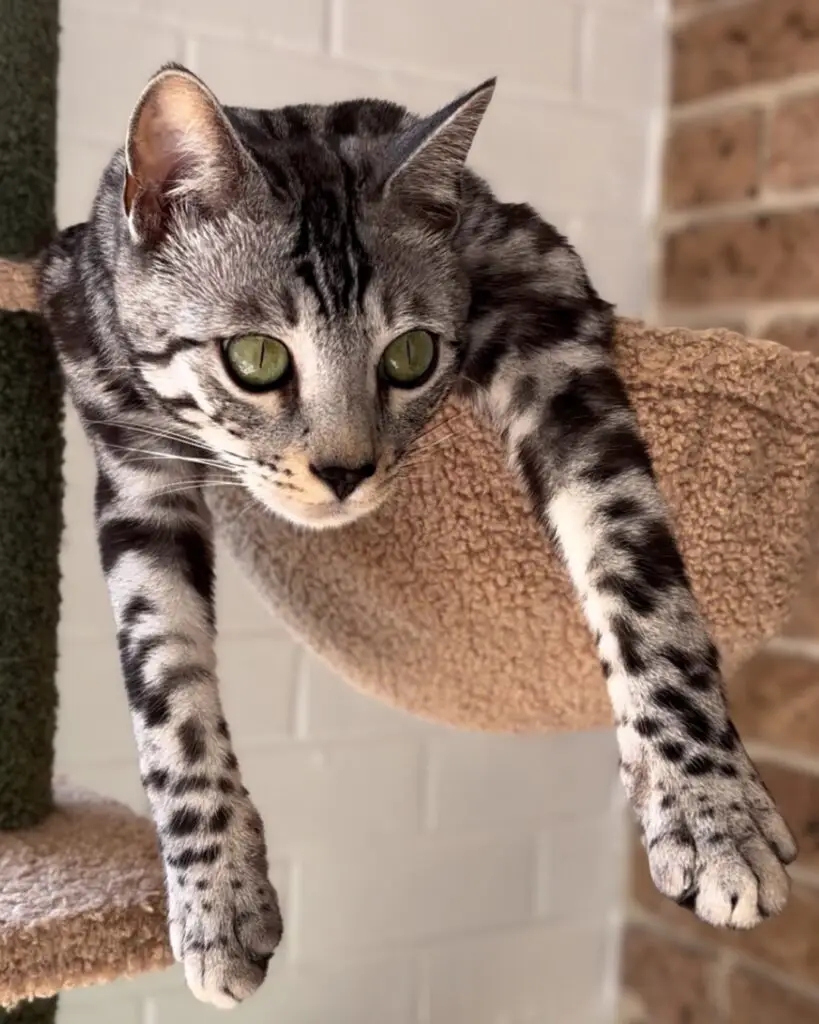
Where do they climb?
Where do they spend time watching?
What objects draw their curiosity again and again?
These observations often reveal more about our cats’ needs than we expect
What I Noticed With Cora

When Cora was younger, she seemed to be everywhere at once.
She climbed the television, the shelves, and the backs of chairs. She opened cupboards and drawers. She even learned how to pull doors open.
If something caught her attention, she would knock it over just to see what would happen.
One moment in particular completely surprised me. Cora had an automatic feeder with a button that could release food. One day I watched her walk over, press the button herself, and then sit there waiting for the food to spill out.
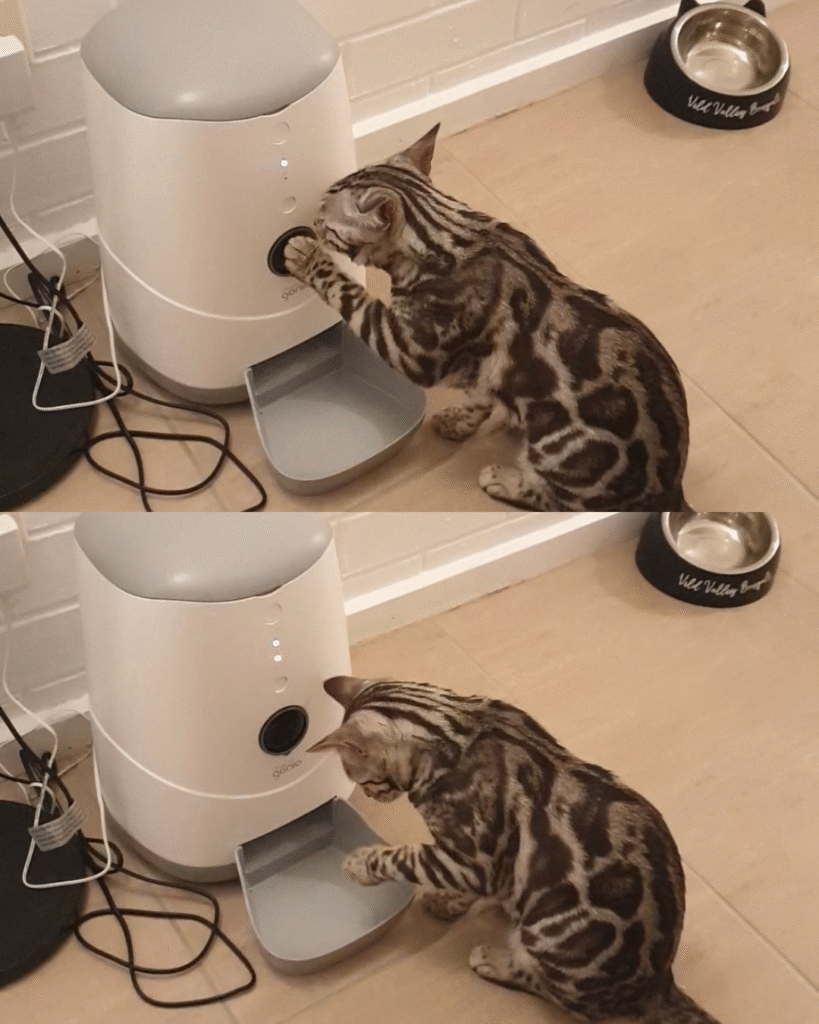
She hadn’t been trained to do it. She had simply watched me use it before.
That moment stayed with me because it showed how closely cats observe the world around them. They notice patterns. They watch what we do. And sometimes they learn simply by paying attention.
At first, I saw all of Cora’s behaviour as misbehavior. I thought she was simply being difficult or too energetic. But when I slowed down and started paying attention, I began to see something different.
Cora wasn’t trying to cause trouble. She was exploring, solving problems, and responding to the environment around her.
She was looking for places to climb, things to investigate, and ways to engage her curiosity. And that realization changed how I approached everything.
Instead of trying to stop the behaviour, I began to understand what it was expressing.
From there, it became easier to gently redirect her energy and create an environment that worked better for both of us.
Once I began adding more outlets for those instincts — vertical spaces, enrichment activities, and places designed for exploration — something started to shift.
Her curiosity didn’t disappear. But it finally had somewhere to go.
And that’s when I began to understand how deeply a cat’s behaviour is shaped by the world they live in.
Understanding Before Correction
Before trying to correct behaviour, it can help to pause and observe.
What opportunities does the environment offer your cat?
Where can they climb?
Where can they observe?
Where can they explore and satisfy their curiosity?
Often the answers begin to appear when we simply start noticing. And from that understanding, calmer behaviour can quietly follow.
Next Step on Your Journey
Understanding is only the beginning.
Once we begin to see what our cats are responding to, we can start guiding behaviour through clearer communication and thoughtful routines.