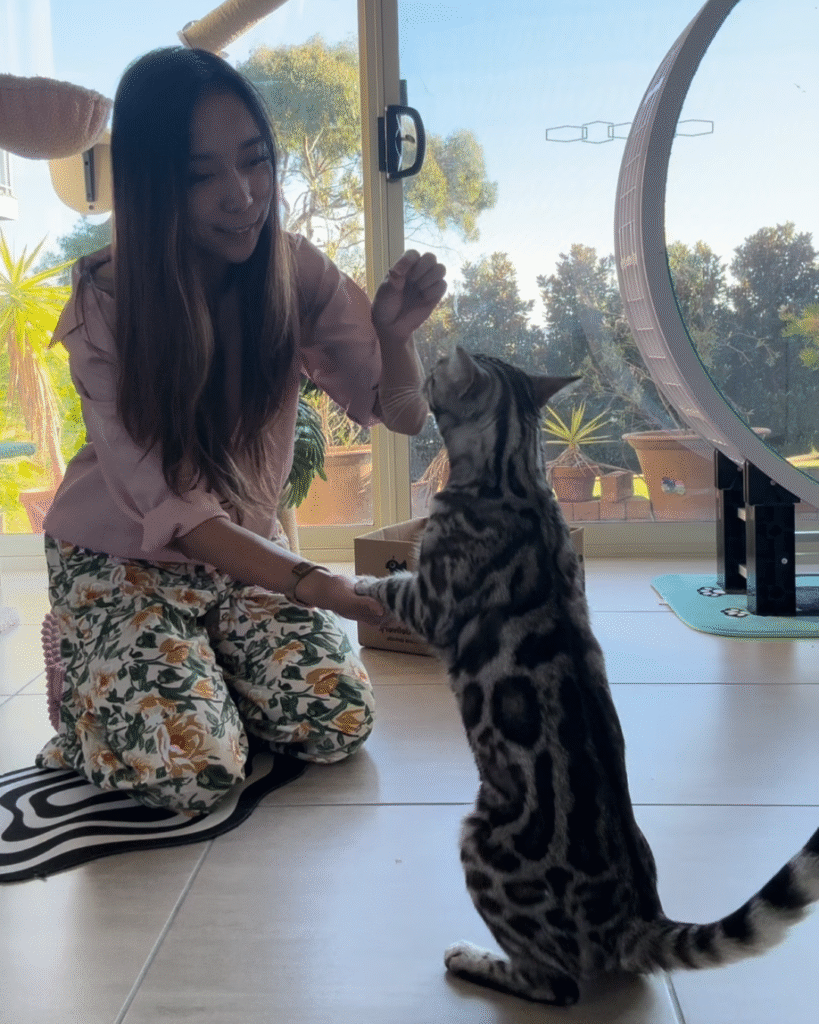
Meeting Cora
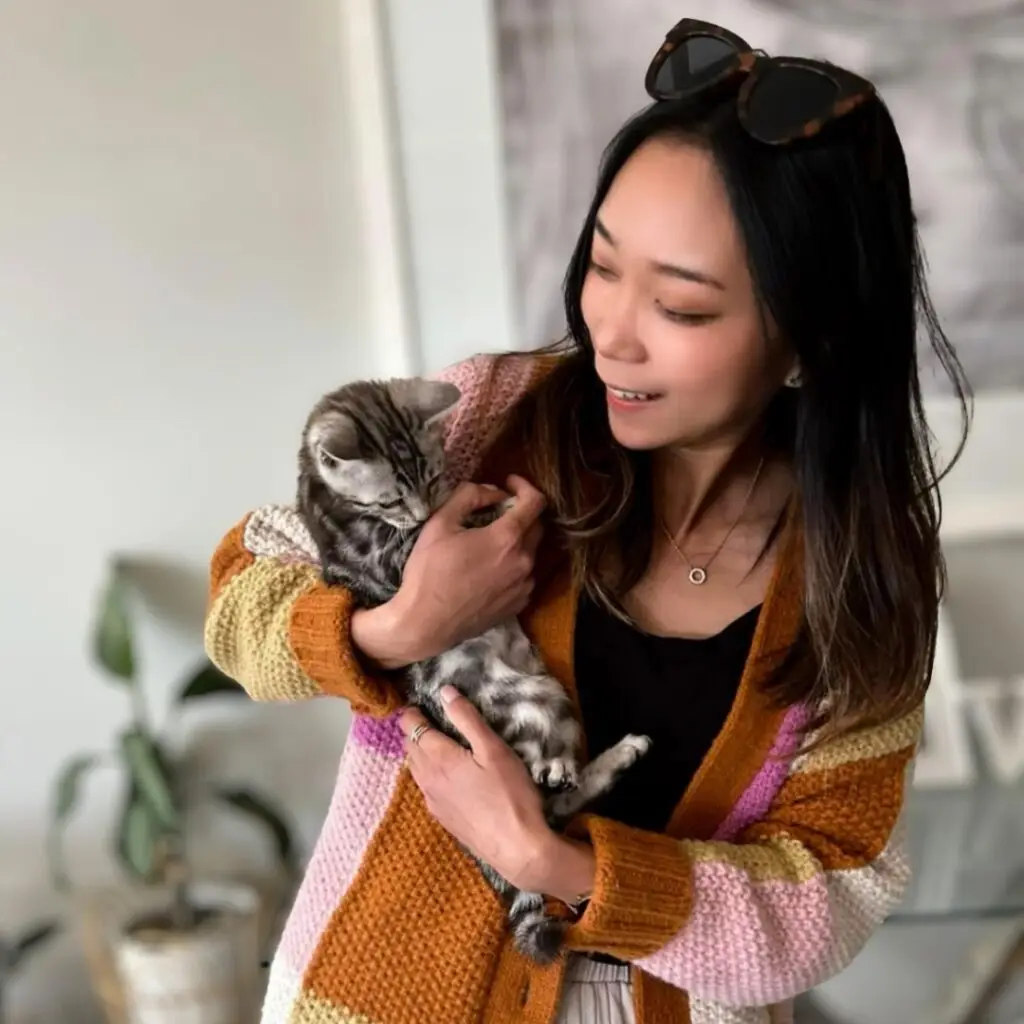
When Cora first came home, I knew immediately she was different.
She moved carefully through the house, watching everything before taking a step. She observed more than she interacted. Whenever I tried to approach or touch her, she would quietly move away.
At first, I felt a little disappointed.
Three months earlier I had adopted Oscar, my first ever cat. Oscar was gentle, calm, affectionate, the kind of cat who happily cuddled and followed me everywhere. So when Cora seemed distant and uninterested in me, I wondered if I had done something wrong.
But what surprised me most was how quickly she bonded with Oscar. By the second day she adored him. She followed him everywhere, stole his favourite sleeping spots, and even tried to steal his food.
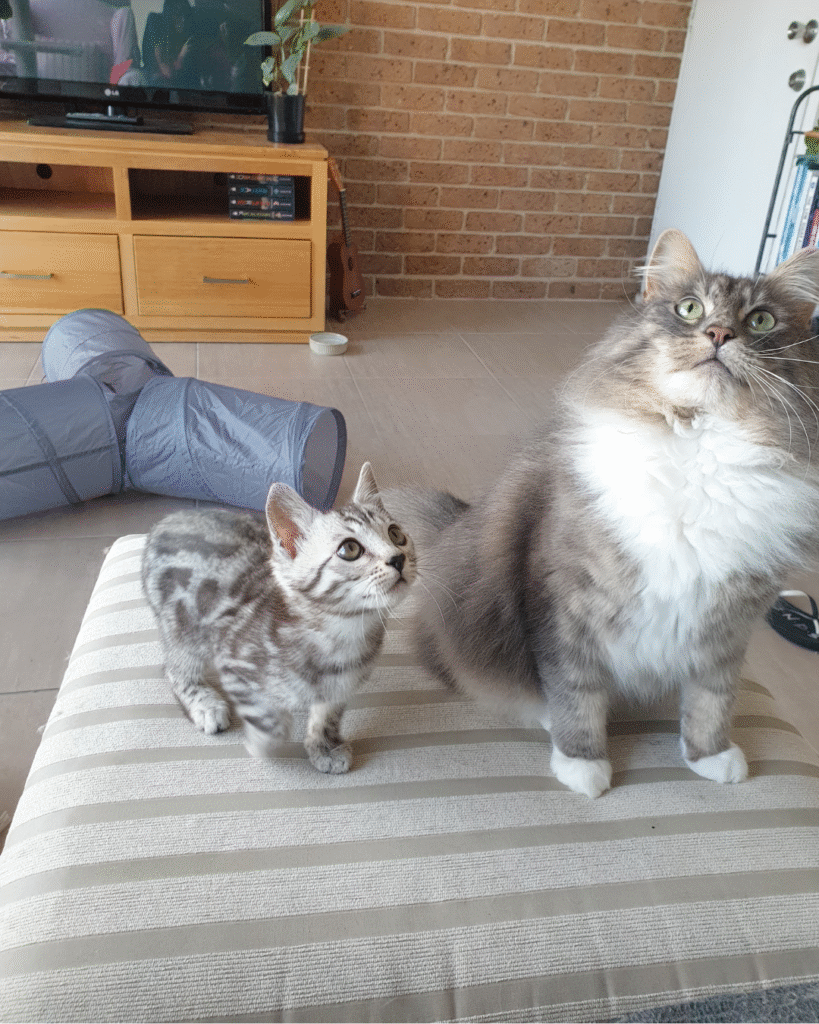
She annoyed him constantly, but Oscar remained exactly who he was patient, gentle, and endlessly tolerant. Not once did he ever react roughly with her.
When I Stopped Trying
For the first five days, Cora mostly avoided me. Eventually I gave up trying to win her attention.
I decided to simply let her be.
Instead of approaching her, I went about my day as usual, talking to Oscar, moving around the house, doing my own thing. And that’s when something unexpected happened.
Cora began approaching me.
One day she quietly squeezed herself between me and the couch and fell asleep beside me. I remember sitting there almost holding my breath, trying not to react too quickly or scare her away.
From that moment on, she slowly began coming closer and closer.
She started pouncing on my feet, biting my hands to get my attention, and bringing me toys so I could throw them for her to retrieve. That was the moment I realized something important.
Cora didn’t want to be chased or forced into interaction.
She wanted to choose it herself.
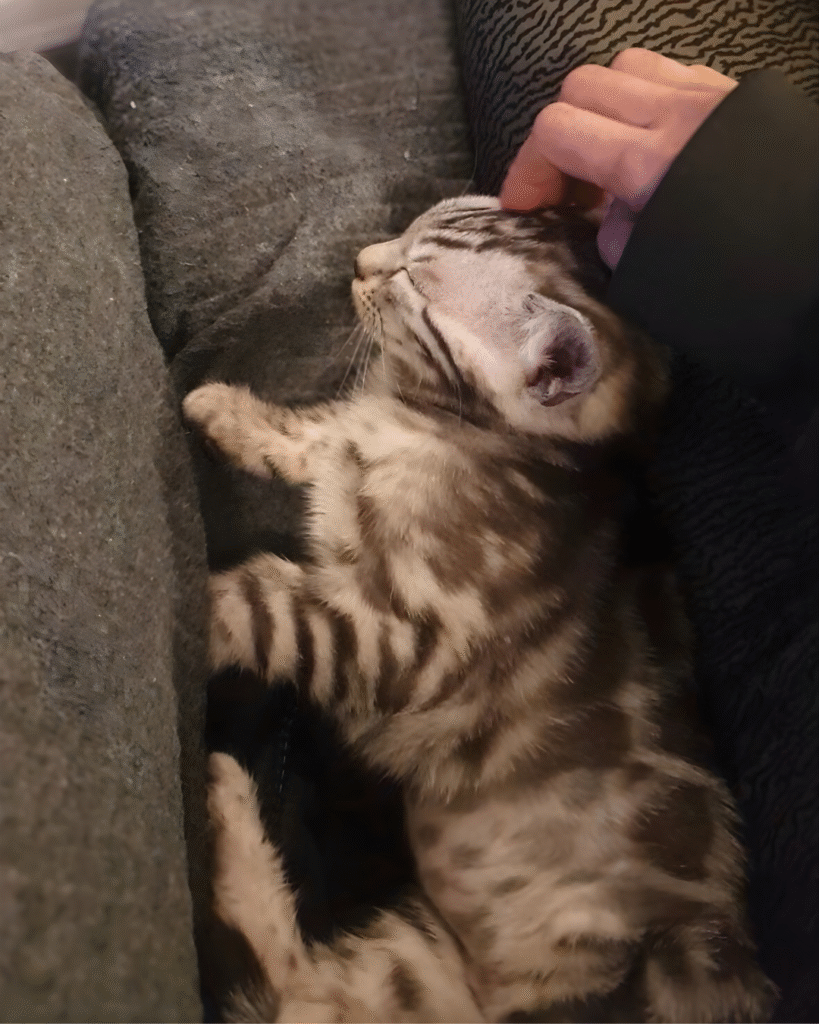
A House Full of Curiousity
Once Cora settled in, her personality revealed itself completely. She was like a small wrecking ball of curiosity.
She climbed everywhere and at that time she didn’t even know how to jump properly yet. Instead, she climbed her way up, paw by paw, often falling but never giving up. Every corner of the house became a puzzle for her to solve.
Water bowls were pushed around and tipped over.
Cupboards and drawers were investigated daily.
Doors were tested again and again.
One time I watched her spend almost thirty minutes trying to open a door. She didn’t stop until she succeeded.
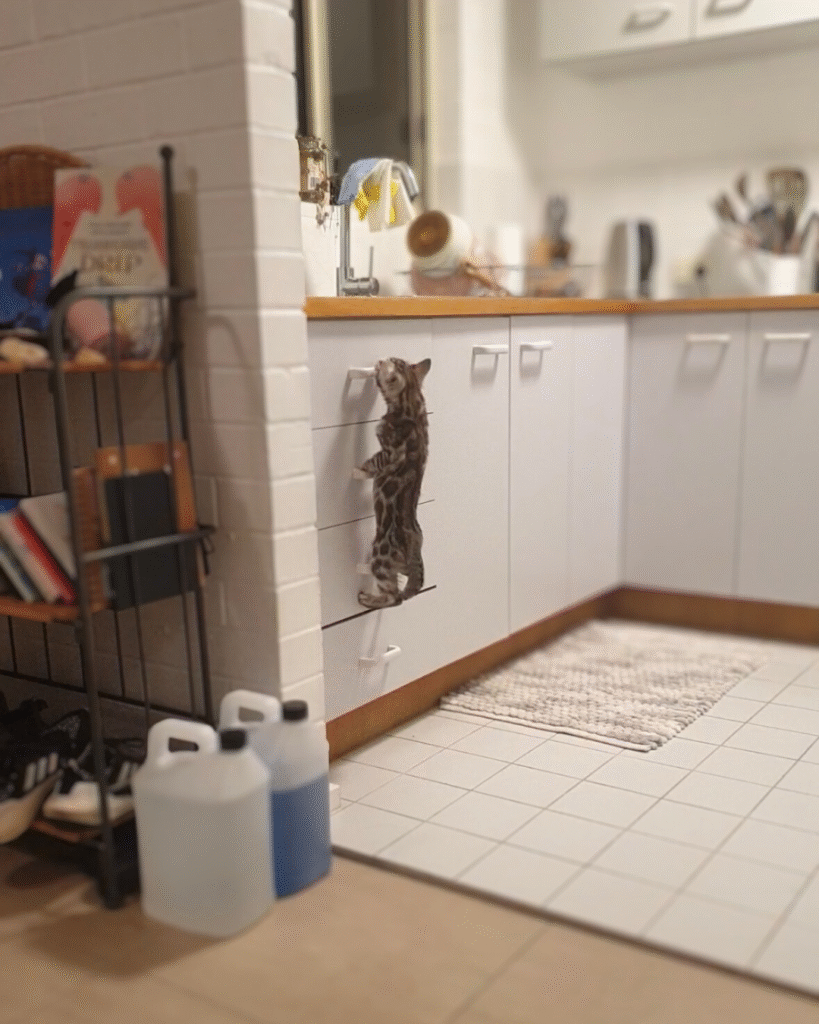
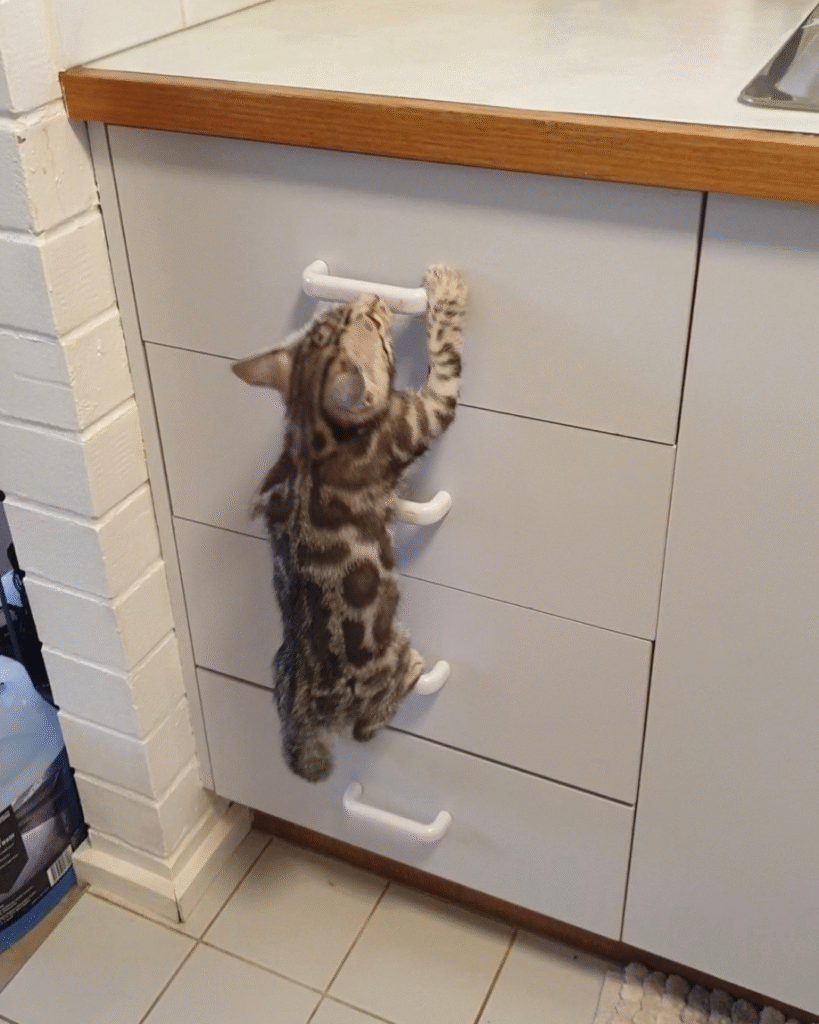
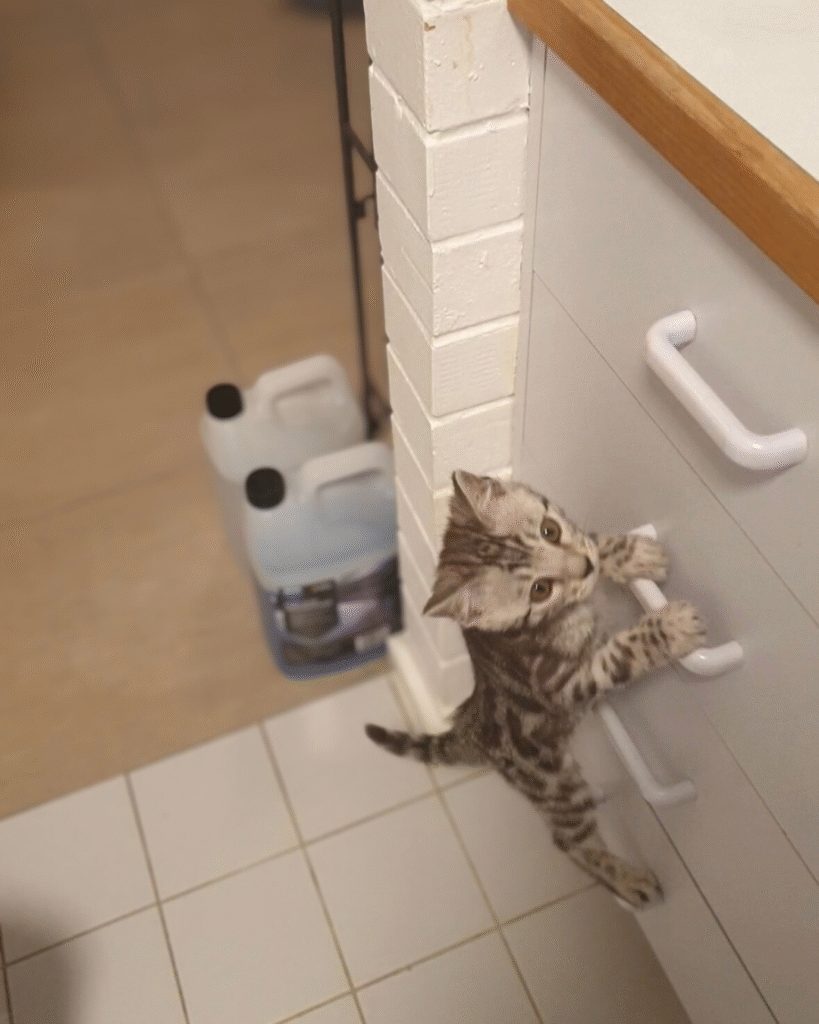
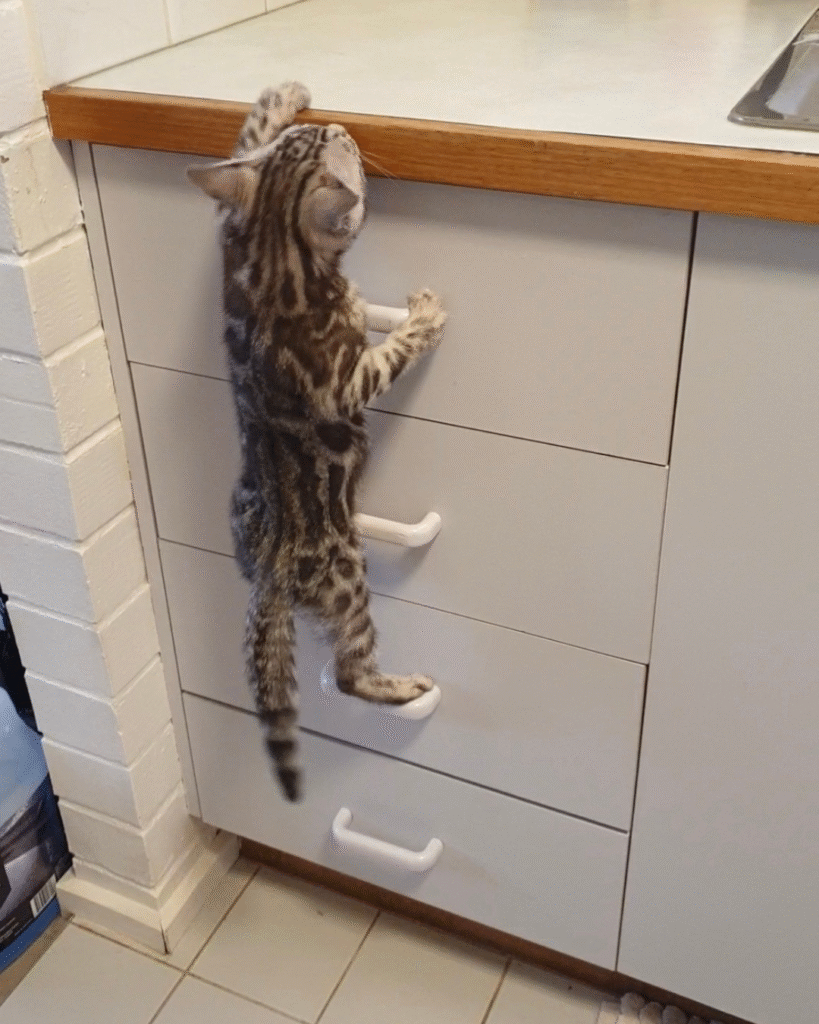
She pulled the string on the blinds just to see them move. She even tried pressing the button on her automatic feeder to see if food would come out.
I remember sitting there thinking:
She’s incredibly smart.
The Beginning of Training
That thought led to another question.
Could I train her?
At first the idea felt ridiculous. She was constantly moving, constantly exploring. There was no way she would listen to me.
Still curious, I grabbed a clicker one evening and decided to try. I clicked once and dropped a treat.
Cora looked at me. Then she sat and waited.
I remember thinking, wow… she’s paying attention.
That same night, when she was just three months old and had been with me for only a week, she learned several things in a single session.
She began recognizing her name.
She came when called.
She learned to sit.
She even learned to spin.
I didn’t start training because I felt confident or experienced. I started because I was curious. And slowly, training became one of the ways we learned to understand each other.
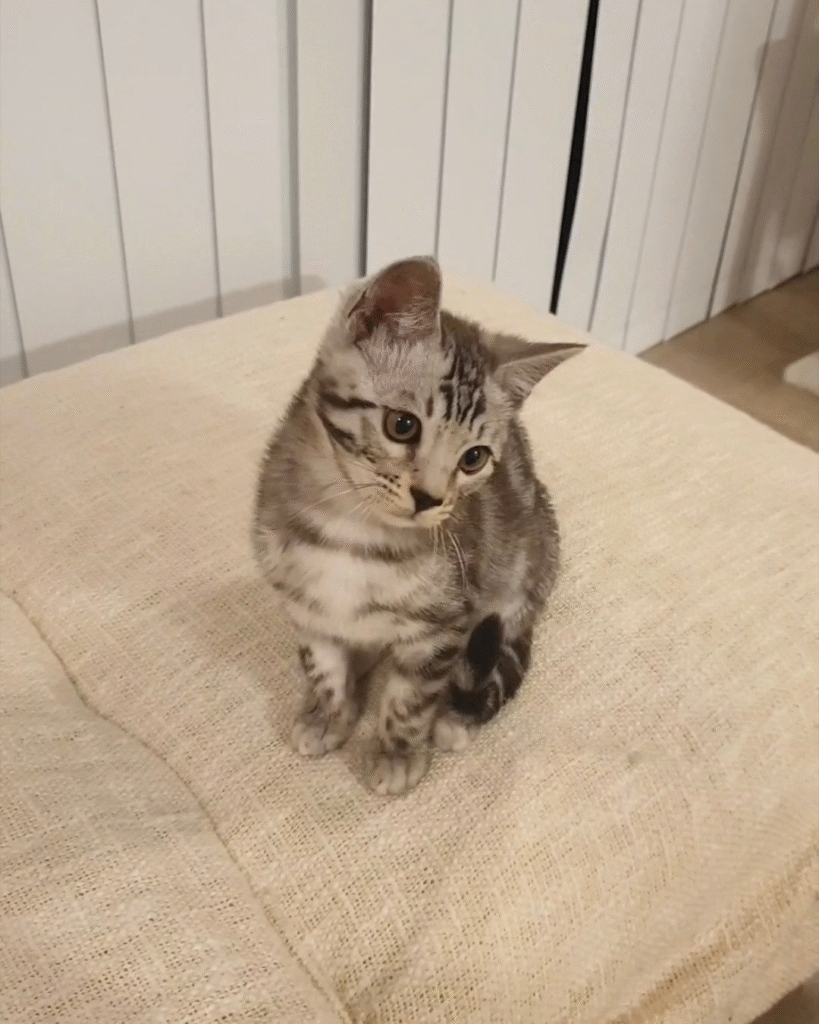
Cora’s first trick training at 3 months old
Life With a High-Energy Bengal
Our days quickly developed a rhythm.
Play.
Eat.
Train.
Play again.
Train again.
At the time, I’ll be honest, I was mostly trying to keep up with her energy. Training helped redirect her curiosity away from trashing the house. It was often the only thing that slowed her down enough to focus.
But keeping up with that energy was exhausting. After work I barely had time to rest. Our evenings were filled with play sessions and training simply so I could hope for a peaceful night of sleep.
I knew what I had signed up for when I got a Bengal.
But knowing something and living it are two very different things.
The Night I Reached My Limit
When Cora was around six or seven months old, I began to feel stuck.
She had mastered most of the tricks I knew. We repeated them over and over, and I could tell she was becoming bored.
One night she suddenly exploded into zoomies across the house. She ran across the bed, accidentally kicking me in the face while I was asleep. Oscar woke up irritated after being pounced on.
Soon they were both racing through the house, chasing each other and knocking things over.
I lay there under my pillow, exhausted and close to tears. I remember thinking:
What am I missing?
We played.
We trained.
I tried everything.
But something still wasn’t working.
Finding the Missing Piece
Eventually I realized something simple.
My home was small.
Maybe Cora needed a bigger outlet for her energy. I had already tried many things, supervised leash walks in the backyard, small adventures like paddle boarding, even café visits on weekends.
But it still didn’t seem like enough.
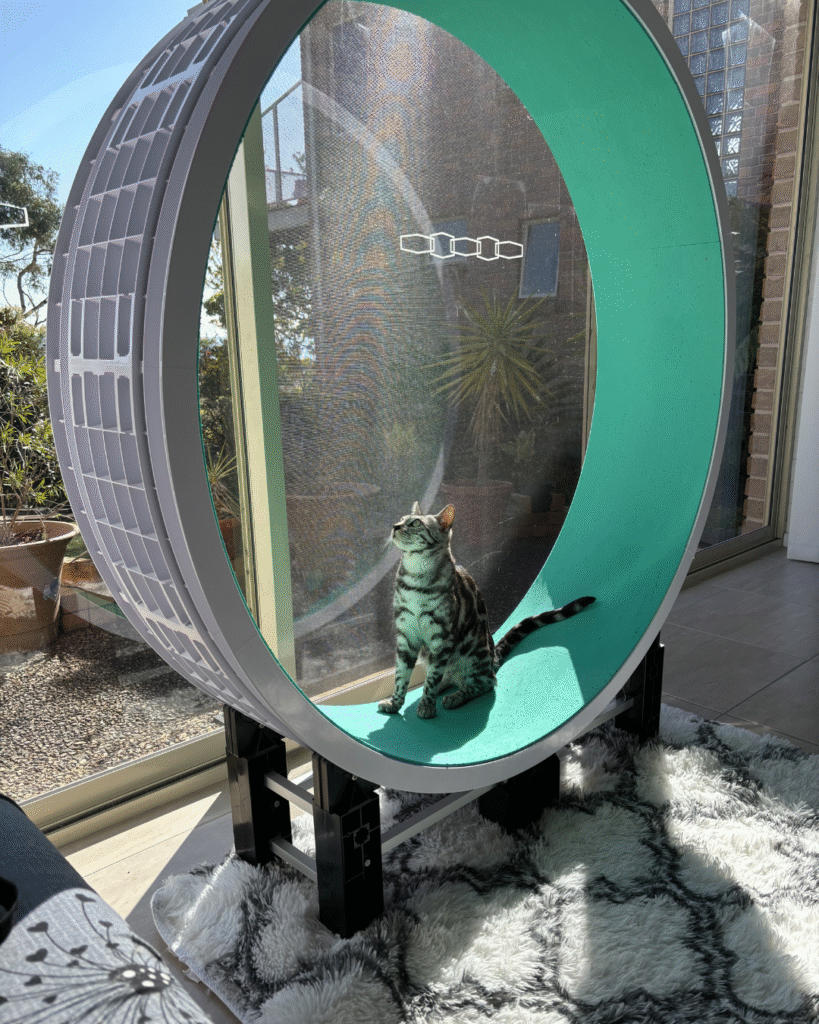
While researching, I came across something I had seen before: a cat exercise wheel.
Immediately the doubt returned.
A good wheel wasn’t cheap. What if she didn’t use it?
Still unsure, I started saving for one. Then something unexpected happened. A friend surprised me by sending exactly the wheel I had been looking at.
The first day we set it up, Cora jumped on and ran like she had been using it her entire life.
Just like that, her zoomies finally had somewhere to go.
And finally, I slept peacefully through the night.
Giving Cora a Voice
Seeing how much the wheel helped made me realize something.
The more outlets Cora had for her instincts, the calmer life became for both of us.
By that point we had already built a small system of communication.
When Cora sat calmly beside me, I understood she was asking for attention. That made me wonder:
What if she could communicate even more clearly?
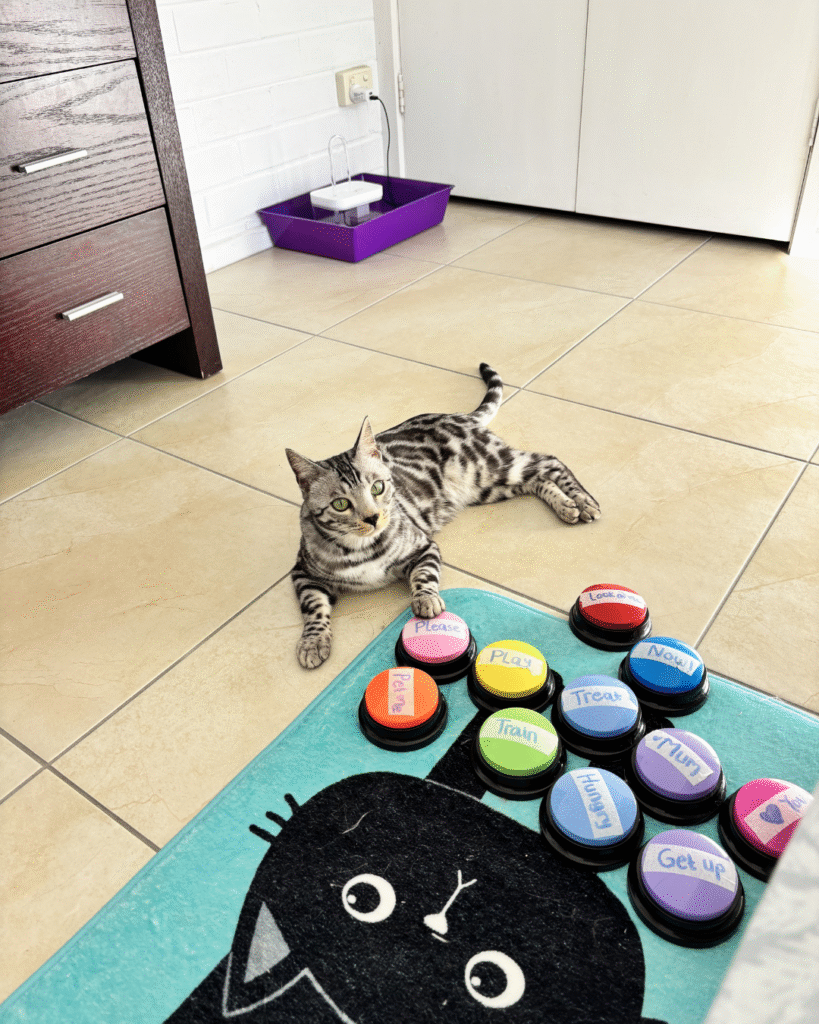
That curiosity led me to talking buttons. I wanted Cora to have a way to tell me what she wanted instead of me constantly guessing.
Her first word was treat.
Then play.
Then more words followed.
Before long she was using the buttons regularly, asking to play, train, eat, or interact.
Slowly, much of the chaos that once filled our house began to fade.
When Communication Changed Our Routine
One morning at around 3 o’clock, I woke up to the sound of a button.
Cora had pressed “hungry.”
Half asleep, I answered her the same way I always do.
“I know, Cora. We’ll eat very soon, not now.”
I didn’t want to get up and feed her in the middle of the night. Part of me worried that if I did, I might accidentally reinforce the behaviour.
Another part of me thought she might simply be pressing the button to make me get out of the bed.
Something about the buttons had always mattered to me.
Whenever Cora pressed one, I responded. Even if I was sleepy. Even if the answer wasn’t what she wanted.
I wanted her to understand that the buttons were there for communication and that communication always receives a response.
The next morning it happened again.
3 o’clock.
“HUNGRY.”
And again I answered.
“Not now, Cora. We’ll eat soon.”
When it happened for the third morning in a row, something finally clicked.
She wasn’t pressing buttons randomly.
She was telling me something.
Our routine needed to change.
While researching enrichment ideas, I came across a post from someone who lived with nine cats. Every night she left several puzzle feeders around the house. If the cats woke up during the night, they would quietly work on the puzzles instead of waking her.
So I tried the same idea. Before going to bed, I placed several puzzle feeders around the house.
The result surprised me.
Some nights my cats sleep peacefully beside me until morning.
Other nights they wake up quietly, solve a puzzle, and go back to sleep.
The early-morning button pressing disappeared.
Instead of trying to stop their nighttime activity, I had simply given them something appropriate to do.
The choice was there.
Still Learning
As my curiosity grew, I found myself wanting to understand cats more deeply.
I started reading more about cat behaviour, books, articles, and case studies. I followed behaviourists and researchers who study how cats think and interact with the world.
The more I learned, the more something interesting happened.
Many of the things I had discovered through trial and error with Cora, observing her instincts, redirecting her energy, creating outlets for curiosity were ideas supported by research and behavioural studies.
It felt like pieces of a puzzle slowly coming together.
What once felt like guesses or experiments began to make more sense.
And that only made me more curious.
The wheel gave her an outlet for energy.
Puzzle feeders gave her something to do at night.
Training challenged her mind.
Buttons gave her a voice.
Little by little, the chaos that once felt overwhelming began to settle. Not because Cora changed who she was. But because I slowly learned how to understand her better.
And even now, she still surprises me.
Because life with a curious cat is never completely predictable.But when we slow down enough to notice what they are trying to tell us, it becomes a journey that keeps teaching us something new.
And in many ways, I’m still learning — alongside her.
Because understanding a cat isn’t something we finish.
It’s something we keep discovering, one quiet moment at a time.